
How to Search Civil Dockets
Two services carry the online load. Just One Look sells on-demand access to a single Alabama trial case, and Alacourt.com offers subscriptions with case details and available images. Elmore County builds no separate civil search portal of its own. Search with the complete case number whenever you can. With only a party name, narrow results to Elmore County, Circuit or District Court, the civil case type, the filing year, and the party role before opening anything.
The free route is electronic inspection at the Elmore County Circuit Clerk counter in the Judicial Complex at 8935 U.S. Highway 231 North, Wetumpka, open 8:00 a.m. to 4:30 p.m. on weekdays. Call 334-514-3116 with questions. A written request mailed to P.O. Box 310, Wetumpka, AL 36093 can ask for a case action summary, a named pleading, or the signed judgment. Confirm the current copy and certification charges first.
- Identify Circuit Civil, District Civil, Small Claims, Domestic Relations, or the separate Probate Court.
- Copy the full case number, or gather the correct party spelling and approximate filing year.
- Search the authorized state service and narrow the result to Elmore County and the right court.
- Read the header, then follow events from complaint and service through the newest order or setting.
- Obtain the actual filing or certified judgment from the correct clerk when the event label is not enough.
Elmore County Civil Docket Limits
Claim value picks the court. Circuit Court holds original civil jurisdiction above $20,000, while District Court is exclusive through $6,000, excluding interest and costs. Between $6,000 and $20,000 the two courts share concurrent jurisdiction, so either may take the case as the filing rules allow. Small claims runs on District Court procedures.
Domestic relations belongs to a Circuit Court division. Estate, guardianship, conservatorship, name-change, and other statutory probate matters stay with the Elmore County Probate Court at 100 East Commerce Street in Wetumpka, under its own separate custodian. A probate file never turns into a Circuit or District civil docket just because every office sits in Elmore County. Before paying for any search, read the court name printed on the filing or notice.
| Elmore forum | General civil role | Record keeper |
|---|---|---|
| Circuit Court | Claims above $20,000, concurrent band, and domestic relations | Elmore County Circuit Clerk |
| District Court | Claims through $20,000 and small claims procedure | Elmore County Circuit Clerk |
| Probate Court | Estates and other statutory probate matters | Elmore County Judge of Probate |
What a Civil Docket Shows
A case action summary opens with the basics. Expect the case number, the court, the civil or domestic case type, the filing date, the status, and the assigned judge. Party and counsel roles follow. The chronology can list the complaint or petition, summons, service return, answer, motions, notices, settings, orders, judgment, enforcement activity, and appeal. Which document images appear depends on the access service and confidentiality rules.
| Case Number | The exact court, case-type, year, and sequence identifier printed by the court. |
|---|---|
| Parties | Plaintiff or petitioner, defendant or respondent, and counsel where public. |
| Filings | Complaint, service activity, answer, motions, notices, and other dated entries. |
| Settings | Case-management, motion, pretrial, or trial dates, including later resets. |
| Judgment | Outcome label and date; the signed order controls its actual scope and terms. |
Alabama's official term is "case action summary." It works as an index and status history. It is not full text of every document. A motion entry proves only that a request was filed, not that it succeeded. An order entry signals court action. The signed order itself supplies the ruling. The Alabama Rules of Civil Procedure govern civil filings in these courts.
That judiciary library page connects the docket chronology to the official procedural rules.
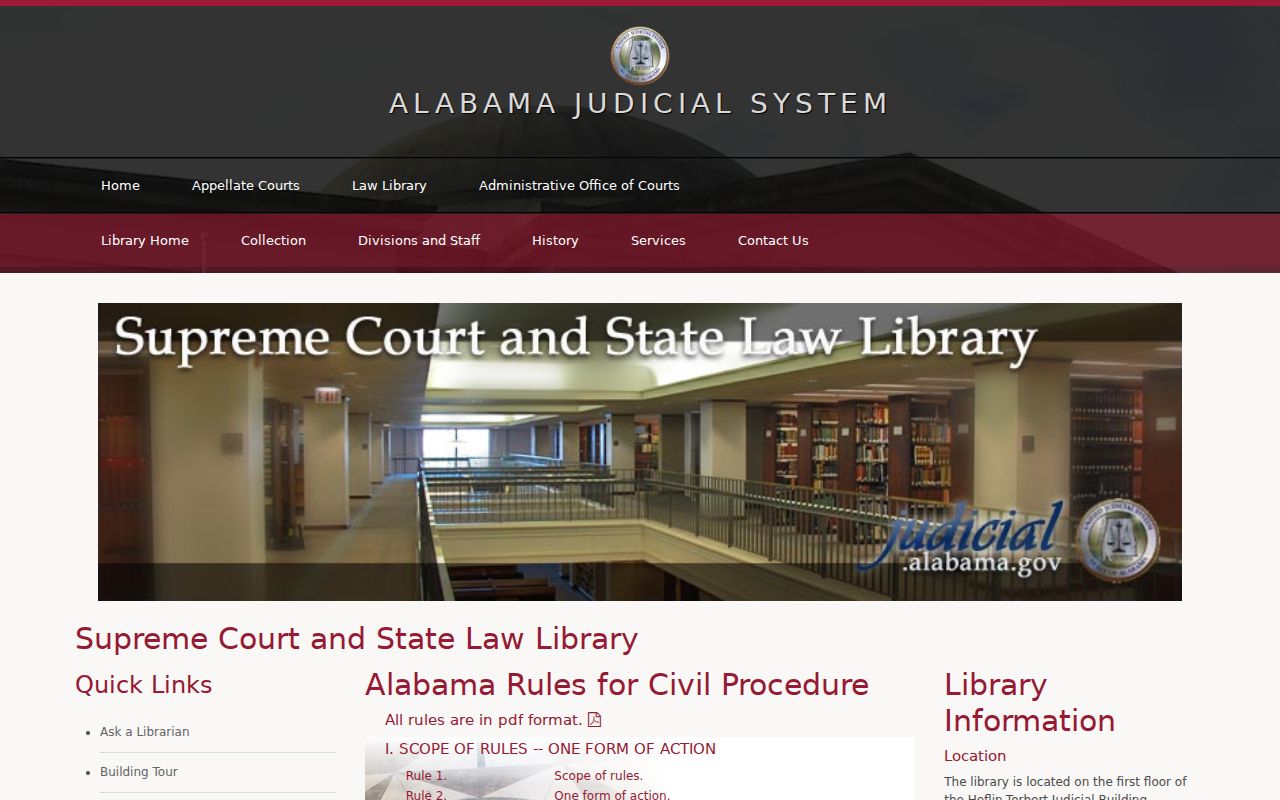
The judicial library page lays out the rules that shape each civil filing. The case record then shows what actually happened under those rules.
Elmore County Civil Docket Timeline
Early docket entries usually show a complaint or petition plus the filing event. Summons or citation issuance follows. Then a return of service records the notice effort. An answer, counterclaim, or other response joins the issues. Discovery stays partly hidden. Motions to compel, motions for protection, and their orders can surface on the Elmore County civil docket.
Later come case-management conferences, motion hearings, pretrial settings, and trial. A dismissal after settlement, summary judgment, default judgment, nonsuit, trial judgment, or other outcome closes the main claim. Costs, post-judgment motions, collection process, or appeal may keep running under the same case number. Those later entries do not start a new lawsuit by themselves.
Civil docket flow: Complaint › Service › Answer › Motions › Settings › Judgment › Post-judgment action
Elmore County Civil Docket Service
Service entries record formal notice. Issuance and return count as separate events, and a failed attempt may lead to another method or address if the court permits. Read the return and any later order before drawing conclusions. A summons entry alone proves nothing about completed service.
Types of Civil Cases on the Docket
Jurisdiction and subject divide these dockets. The category is a routing label, never proof a claim is true. The complaint shows what relief was requested; the signed judgment shows what the court decided.
- Circuit civil claims above the court's jurisdictional threshold.
- District civil disputes within the court's stated dollar limits.
- Small claims handled through District Court procedures.
- Domestic relations matters maintained in a Circuit division, subject to access limits.
- Post-judgment enforcement and appeal activity tied to a civil case.
Probate cases sit outside this list because the Judge of Probate keeps them. Municipal ordinance prosecutions are not civil claims just because a city is involved. Classify the case correctly and spare yourself a fruitless Elmore County civil docket search.
Read Elmore County Civil Dockets
A judgment entry records the court's decision. But the signed judgment fixes its scope and any amount. Default judgment follows a failure to respond or defend, and only after the required procedure. Summary judgment resolves qualifying issues without trial, on the governing legal and evidentiary record. A dismissal ends a claim exactly as its order states.
- Nonsuit
- The claimant voluntarily ends a civil claim as procedure permits.
- Default judgment
- A judgment after required response or defense did not occur, subject to legal prerequisites.
- Dismissed for want of prosecution
- A case ended because it was not pursued; use this meaning only when the docket states it.
- Consent judgment
- An agreed disposition that the court approves or enters.
- Appeal or transfer
- Movement that may create a new number and another docket to search.
A short status label can mislead. Pull the order itself. When an Elmore County civil docket entry mentions a transfer, consolidation, or appeal with another number, search that number too, because the docket works best as a map to the controlling documents.
Settings and Hearings on Civil Dockets
A civil setting on the docket can take several forms. It may be a case-management conference, a motion hearing, a pretrial conference, a bench trial, or a jury trial. Before relying on any date, find the newest notice or scheduling order. Compare it against the latest case action entry. Elmore County's official court pages organize trial docket schedules by assigned judge rather than through one master county calendar. So the judge field matters when you search.
A filed motion to continue does nothing to the date until the judge signs an order. The old setting may sit in the history. It stays right beside the request and the new notice. Read from the newest entry backward. If a notice conflicts with the judge's posted schedule, call the assigned court or the Circuit Clerk with the case number in hand. The Elmore County court calendar lays out the full date-confirmation route.
Note: The latest signed order or notice controls over an old Elmore County civil setting still visible in the chronology.
Elmore County Civil Docket Judgments
The case action summary tells you when a judgment was entered. The signed judgment tells you what relief was granted, denied, or reserved. Complaints and motions work the same way. A docket label is just a compact description. The filed document holds the allegations, the request, the reasoning, or the terms. Images may be available through Alacourt. Inspecting records on site gives you public electronic access at no charge.
Want a certified result? Identify the exact judgment and ask the Elmore County Circuit Clerk to authenticate a copy. Rule 30 sets a limit. It allows certification only when the original document is filed or recorded with the clerk. Be ready to submit the request in writing, prepay, and cover postage. Ask the clerk the current dollar cost before you mail any funds.
An appeal route depends on the court system. A federal case's review may go to the federal Eleventh Circuit. A state civil result goes to Alabama's appellate courts. The court's own appellate pages show the federal side.
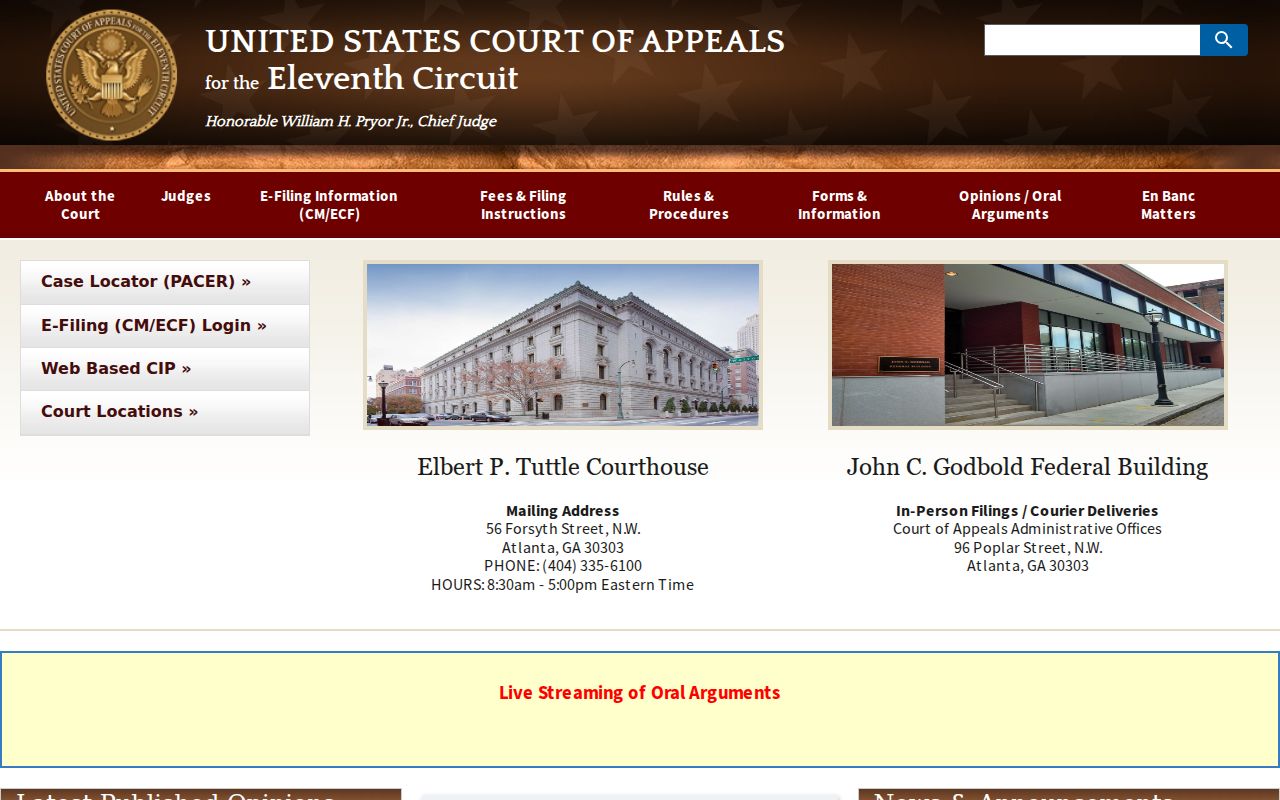
That boundary matters here. An ordinary Elmore County state civil appeal does not become a federal appeal just because the county sits inside the Eleventh Circuit region.
Elmore County Civil Docket Appeals
An appeal adds its own paper trail. Expect a notice, record-preparation activity, and a second case number. Search any cross-reference instead of treating one word, "appealed," as the final fact in the Elmore County civil docket.
The trial judgment still stands in the record. The later appellate docket tracks the review. Which court hears it, state or federal, depends on the system that entered the judgment.
Public Access to Civil Dockets
Alabama law backs the public's right to inspect and copy public writings. Court rules govern court records plus their exceptions. Anyone may view public electronic dockets and filed documents at the Elmore County Circuit Clerk office. Access runs during regular business hours. There is no inspection fee. Copies, certification, mailed delivery, and remote commercial access are separate services with their own terms.
The official Alabama Code §36-12-40 page sets out the public-access right in full.
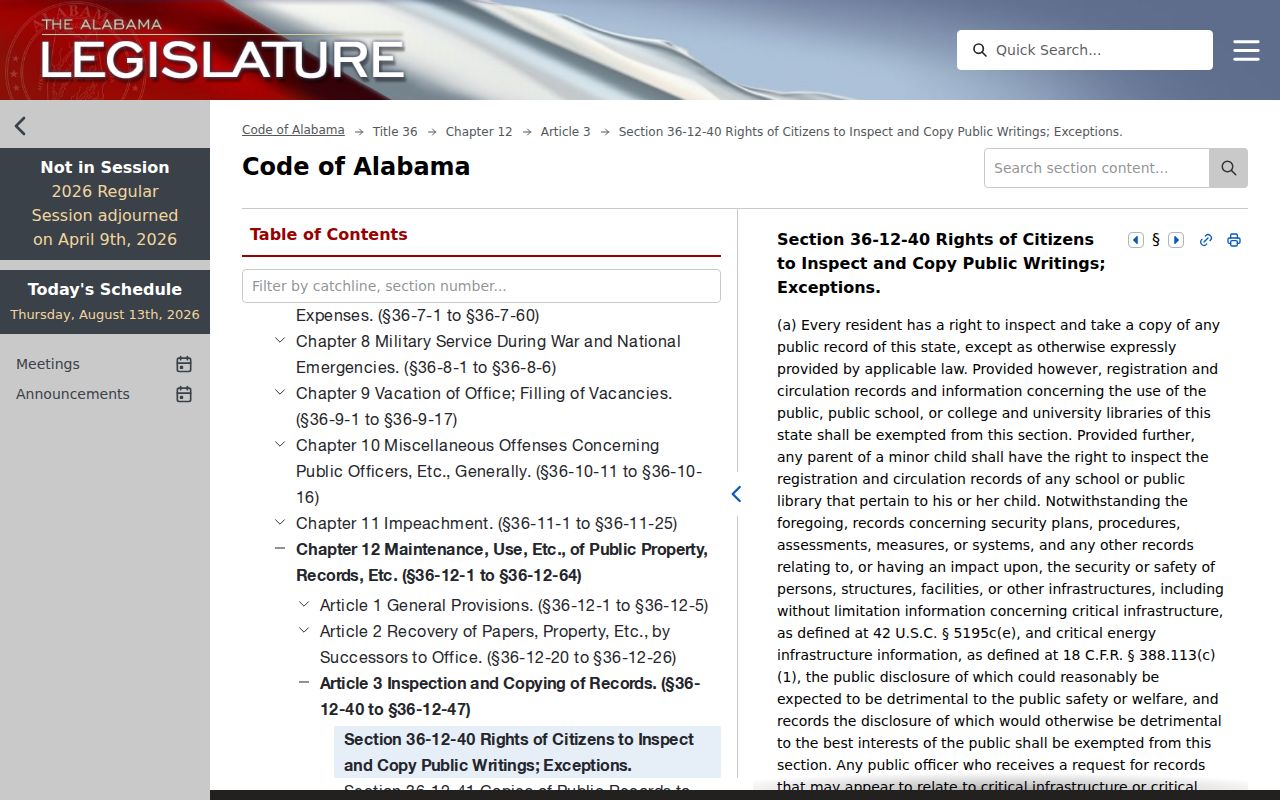
The statute supports inspection while leaving court-specific privacy and confidentiality rules untouched.
Public access boundaries:
Alabama Code §36-12-40 protects access to public writings unless another law supplies an exception.
Rule of Judicial Administration 30 governs clerk copies, certification, payment, and searches.
Alabama's court-record privacy rules govern confidential and protected court information.
Restricted Elmore County Civil Dockets
Not everything shows up in a public Elmore County civil docket. Some family material, adoption records, sealed filings, protected personal identifiers, and other confidential categories may be missing. Others may lack a remote image. Filers must redact protected information. The published e-filing policy warns that clerks do not review every pleading for redaction. And public access never licenses anyone to work around a seal or a confidentiality rule.
A blank search result is not the end. Check the spelling, the court, the filing year, and whether the matter belongs in probate. Ask the Circuit Clerk about older files. The file may sit on paper, microfilm, or in another repository. If access is restricted, ask which rule or order applies. Then ask what request route it authorizes. A generic public-record request cannot dissolve a seal.
Elmore County Civil Docket Requests
Keep the request narrow. Name the Circuit or District Court and the division. Give the complete case number and the case style if known. Add the exact document title and date, plain or certified copies, your delivery method, contact details, and any deadline. Call first to confirm custody, page count, current fees, payment method, and likely processing time. For mail, follow the clerk's instructions and plan on requester-paid postage.
A transcript travels a different path. The official court reporter makes the word-for-word record of proceedings. The reporter prepares a transcript on request. The clerk's counter handles filed papers and docket copies. Probate, municipal, and federal records each sit with separate custodians too. Keeping those products and offices straight pays off. It makes the Elmore County civil docket a reliable starting point rather than a false promise of one universal file.